

Poland’s National Obsession with Sandwiches
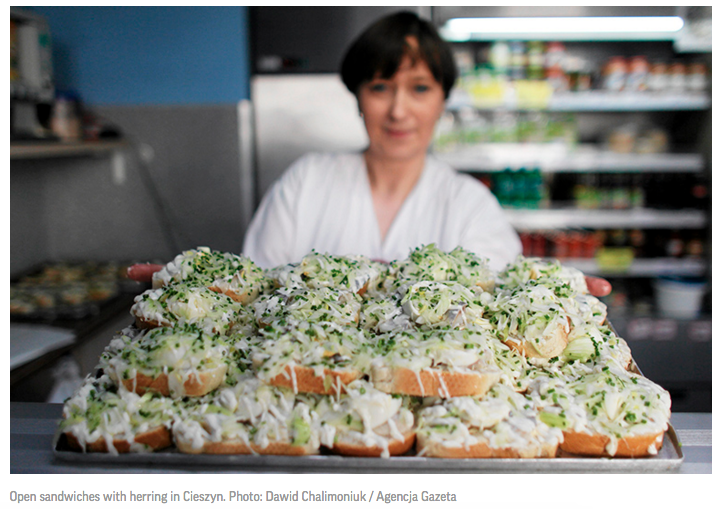
Foreigners, especially those from Anglo-Saxon countries, are often taken aback by our “kanapki”. These open sandwiches we eat at every possible mealtime leave the “filling on top” exposed to the elements, unlike in so-called “normal” sandwiches.
Kanapki (from the French word “canapés”) appeared in Poland at the end of the 19th century thanks to French cuisine. Smaller open sandwiches, or canapés, were actually called “tartinki”. The names have a certain irony here though, as “tartines” in France are actually large open sandwiches, while, as everybody knows, canapés are bite-sized.
Read on here.
Tartinki. What’s not to want? Such a sweet and appetizing-zing word. Not to be confused with open-faced Chinese poker.
Smørrebrød, the open-faced Danish sandwiches that truly are a part of everyday Danish life, are relations to tartinki, of course. There is no escaping all of our connections, culinary or otherwise. The indigenous foods of Poland cannot be much different from those of lower Scandinavia. Take away the man-made borders and you get earth made connections of climate and soil. Right? Right.
Denmark’s sandwiches are those that I know best, but I would bet my bottom pound of butter that there are chain-strong links all across northern Europe that make a dot-to-dot map of open-faced sandwiches, using many of the same or similar ingredients – butter, shrimp, eggs, cheese, smoked fish, caviar, cucumber and all the other abundances of cool, four-season climates.
The urge to visit Poland never hit me so hard as it did when I read about a shared obsession. After food, what binds us the most? Desire, disposition, oh my.



 The Lunch Encounter