Category Archives: Uncategorized

CROWN Candy Kitchen, St Louis JEWEL

This post on the Bottle Rockets message board, my home away from home at home, raised my antennae:

They have been in the same location since 1913 (same family.)
They make their own ice cream and chocolate.
They have a huge BLT, 1/2 lb of bacon easily.
‘Nuff said!
I had a chocolate banana malt there last weekend to infuse some carbs into my diet…
Soufside

The poster, Soufside, as in souf side of St. Louis, referenced Crown Candy Kitchen.

I felt compelled to contact the poster directly and he graciously responded, with links. I would expect no less from a bacon-and-shake loving boy. Nice.

I’ve been going there literally all my life. My mom’s best friend lived
across the street and it was her home away from home.

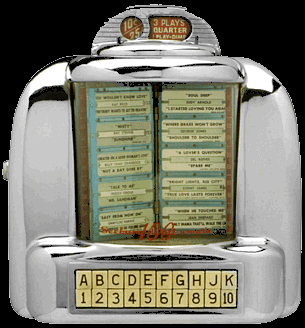
Each booth has a Seaburg Wall-o-matic jukebox selector thingy.

3w1photo.gif
“Back In The Day”, as the kids say, they all hooked up to a central juke box so you could pick songs from your seat. The haven’t worked for 30 or so years, and still have the last juke box cards in them from the late ’60s or early ’70s.

The Reuben and the BLT are their most popular sandwiches, Souf continued. They also do a very nice Chili Tamale with Cheese and Onions.

Click here for an inside look at the sprawling candy counter. Through squints I made out Ike and Mikes. Licorice wrapped in a cracked Sunday-school-shoe pink, sweetpea green, or white, plain cold white, shell. Oh wait a minute, those are licorice snaps. Even better.

Click here for some exterior photos and milkshake info. On this site, chopped onion, the vanilla shake is described as euphoric. Now that I would like to see. Can euphoria squeeze through a straw? Crown Candy Kitchen is a real nice looking place. Plenty of street parking too, which I believe is a comment on the neighborhood

And the prologue. Click here and here for what the photographer would have seen had he turned around. Apparently someone turned around, camera to eye. These shots are beautiful, in an urban decrepitude sort of way. When the eyes of the property owners behold these sites I doubt they see beauty. Ca-ching is not the sound effect that comes to mind.

The picture of Park’s Drug on page 2 was taken from Crown’s doorway,
writes Souf. I wouldn’t know, having never been to St. Louis. Sniff. I’m an armchair sandwich girl, flicking crumbs onto the carpet and wiping my mouth on the sleeve of my housecoat.

U-C-Em at the MU-Z-Em

clue02.jpg
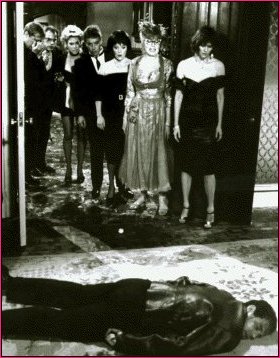
(l-r)Colonel Mustard, Mister Green, The French Maid, Professor Plum, Miss Scarlet, Miss Peacock, Miss White

This week’s featured exalted food:

MUSTARD

Say you’re hot for mustard. Should you find yourself in Doesburg (Holland), Beaune (France), Mt Horeb, Wisconsin (USA), Dijon (France), Norfolk, (England) or Boston, Massachusetts (USA), with a little time to fill, there is a museum for you! The listing below was lifted from the directory on The Food History News site. Compiled meticulously by my mother, any inaccuracies would be shocking. Although I did have a little trouble with a couple of the websites… Must be me. If not, the cornerstone of my world has a hairline crack.

Mount Horeb, Wisconsin is in the realm of the possible for me. I’ve been there in fact – years ago. Time to repeat that jaunt. France, on the other hand, may as well be on the moon as far as my travel plans are concerned. France, England, Germany. Nope. I’ll click on the Fallot Mustard Mill site, French-English dictionary in one hand, le jambon sur le pain de seigle avec le moutard in the other. Ahem. Forgive me, I spent the afternoon at a French matinee.

Read on below to learn a couple tidbits about the partnership of M. Grey and M. Poupon (Mr. and Mr. to me). Did they do it in the kitchen? With the…candle stick? Nah, musta been the cook with a copper pot.

Doesburgsch Mostard en Aziijnmuseum
Boekholtstraat 22
Doesburg 6984 CW
NETHERLANDS
Tel/Fax: 0313-472230

Mission: Mills for the grinding of mustard seed date from when Doesburg, an old Geldern town of the Hanseatic League, was a busy Ijssel River trading center. The museum features furnishings and equipment from an old mustard factory, as well as demonstrations and exhibits on the traditional production and uses of mustard

Admission Info: Open Monday – Friday, 10 am – 5 pm; Saturday, 11 am – 4 pm. Closed on Monday from January through March.

Fallot Mustard Mill
Beaune
France

Mission: The Fallot Mustard Mill, the last independent mustard mill in Burgundy, is housed in the Napoleonic building of the original mustard factory, with its jars, table-mounted sieves, old drive belts, winnowing machines and millstones. An interactive tour, using video and other contemporary technology, is offered to groups limited to a maximum of 20. Fallot has been an independent Burgundian family business since 1840. The Mill continues to prepare its mustard using recipes guarded over several generations, milling the mustard seed with stone grinders.

Mount Horeb Mustard Museum
100 W. Main St.
P.O. Box 72
Mount Horeb WI 53572
Curator: Barry Levenson, founder/curator
Tel/Fax: 800-438-6878

Mission: Video show; worldwide collection of thousands of kinds of mustard and 1,000+ antique mustard pots, housed in 7,700 sq. ft. storefront building..

Admission Info: Open daily, except major holidays, 10 am – 5 pm
Other Info: Issues a periodic newsletter.

Musee de la Moutarde Amora
48 Quai Nicolas Rolin
Dijon 21000
FRANCE
Tel/Fax: 03-80-44-44-52

Mission: On a recommended one-hour visit, one can explore the history of mustard and moutardiers (mustard makers) as well as view old mustard advertising posters.

Admission Info: Open June 15 – September 15, daily except Sunday and holidays, with 3 pm tours leaving from Quai Nicolas Rolin (reservations required at the Office de Tourisme de Dijon. tel: 03-80-44-11-44); open September 16 – June 14, only Tuesday and Saturday, 2-6 pm. Admission free.

Other Info: Undoubtedly the mustard capital of the world is Dijon in eastern France. This picturesque city gained its reputation as the home of master mustard makers in the 13th century. The French were passionate about mustard, considering it the condiment of kings. They passed strict laws governing what could be called Dijon mustard and still ensure that mustard labeled Dijon adheres to appellation controllee standards, much like fine French wines. The most famous of the great Dijon mustard firms was founded in 1777. M. Grey, who had developed a secret recipe for a strong mustard made with white wine, formed a partnership with M. Poupon, who supplied the financial backing to manufacture the product.. The creamy mustard their partnership yielded remains the standard by which Dijon mustards are judged. Grey and Poupon also revolutionized the business by introducing the first automatic mustard machines, thus freeing workers from a backbreaking chore. Today, at 32 Rue de Iz Liberte in the heart of Dijon, one can visit the Grey Poupon building which over the years has become a mecca for mustard lovers the world over.

Mustard Shop Museum
15 Royal Arcade
Norwich
Norfolk NR2 1NQ
ENGLAND
Tel/Fax: (01603) 627889

Mission: Opened to commemorate the 150th anniversary of the partnership between Jeremiah and James Colman. In late 19th-century style. Implements used in mustard making in the past. Advertising material, including mustard pots, posters, and old packaging.

The Mustard Shop
Faneuil Hall
Boston MA 02100

Mission: Historic displays illustrating the atmosphere of Colman’s in the 19th century, when mustard was transported to all parts of the British Empire. Mustard cultivation and manufacture, packaging, advertising.

Did we ever water those melons!

melon_2.jpg
A story in the Washington Post food section today – Tap Into the Secrets of Picking the Best Melons – included a watermelon pizza. It seems to me if you can put watermelon on a pizza and make the paper, watermelon in a sandwich might be good, or better even. Iceberg lettuce is good and it serves a similar purpose – wet, mild and crunchy. The brie on the pizza was too mild though cause watermelon needs salt and tang to counter its soft sweetness. The basil was good and the parmesan too. Parmesan is sharp and salty. Let’s rework this pizza and turn it into a late summer sandwich. Just for fun.

Start with firm white bread – like a dense Italian. Plain. Sliced pretty thin. Butter it. Shave off some watermelon and lay it on top of the butter. Salt it. Sprinkle with crumbled feta. Now the basil. Tear it. I say add some mint. Mint and basil are good mates, and in this case they bridge the gap between sweet and savory. Grind pepper on top. Parm, shaved too. Or not. Up to you. Press on the top. Slice sandwich and eat asap. You know, I’ll bet red onion sliced so thin it’s see-through would be good between the butter and the herbs.

Okay, it might be weird and not good, but I’m going to try it. We have an excess of watermelons since we grew a crop this year and that one shaving ought to really lighten our load. Never knew you could get so many watermelons out of five measly seeds.

Anyway, the pizza was weird and not good, but the picture is pretty, although it sure looks blown out on the Post website. Hey, and what’s with skipping my credit!??! There is no pay involved when your work goes to the web. Dang, how bout a credit?

Speaking of watermelons and picking the best of em….
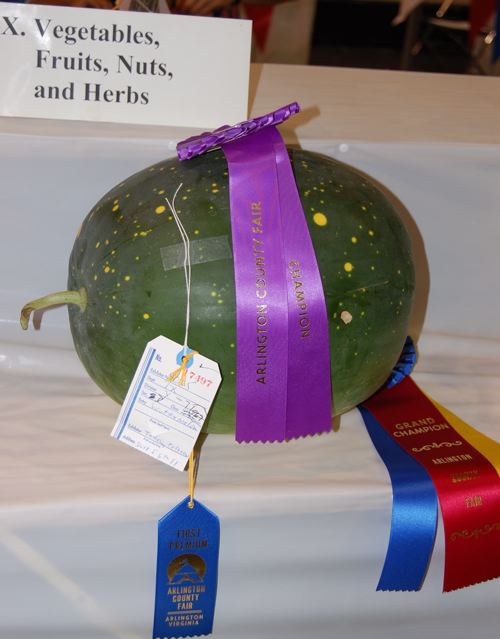
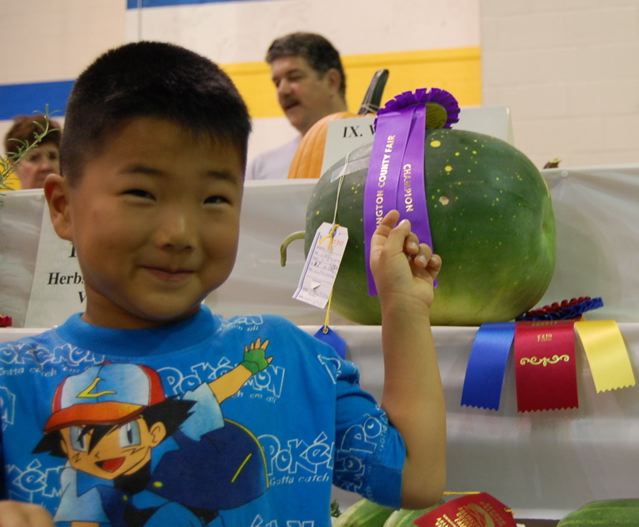
How do you know when they are ripe, dagnabit? I know about thumping, but I don’t buy it. We have some beauties growing out back, plus a monster we picked to enter in the county fair. The entry was deemed Grand Champion – yowza! Home again now, we are afraid to cut it open. Made the mistake of cracking a smaller one earlier in the season only to find anemic flesh inside. Had to pitch it. What a shame. Dropped the second. Whoops. Cracked. Pale inside. Deep-sixed it, deep, so as not to get caught by the authorities.

smirking_2.jpg

Okay, got to stop posting pictures of my kid. Summer is over and now we are going to buckle down.

The Kitchen That David Built

img_4895.jpg
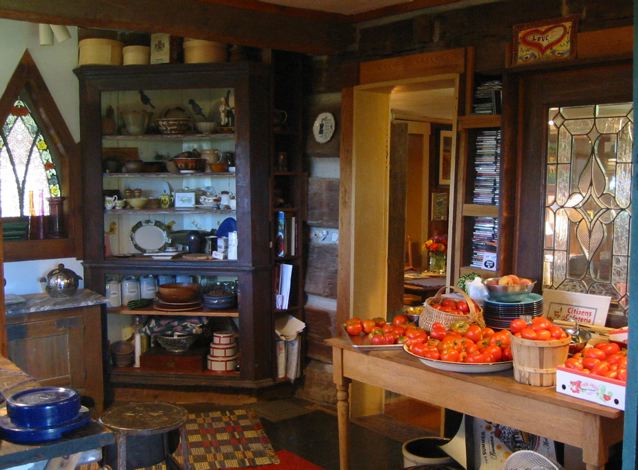
This is the kitchen that David built.

img_4933.jpg
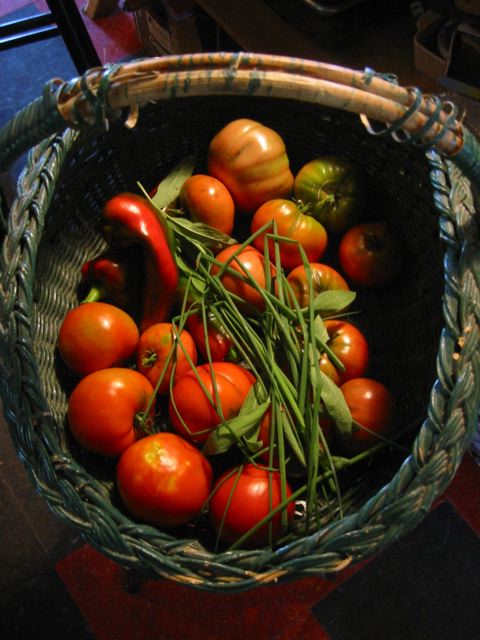
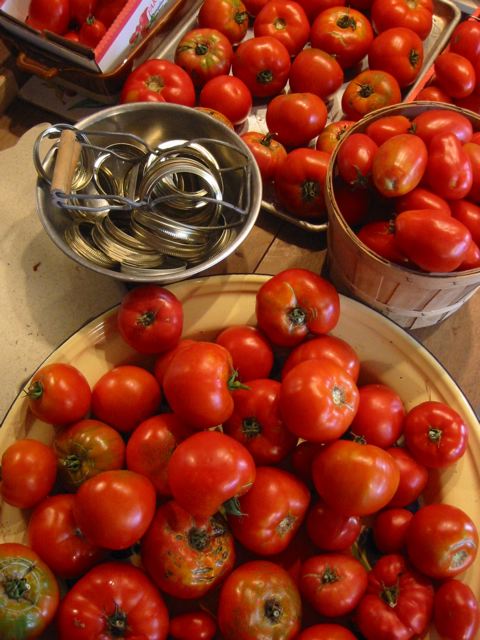
These are the tomatoes, that were grown by Miriam, and put in a basket, and carried to the house and into the kitchen that David built.

img_4880.jpg
These are the boxes and baskets and crates where the tomatoes rested and nested and waited, to be made into salads and sandwiches and sauces, on the table, beside the hutch, in the kitchen that David built.

img_4901.jpg
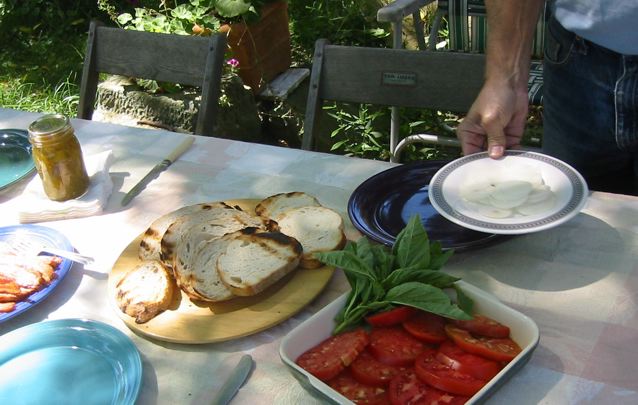
These are the dishes that were laid on the table, to bask in the sun, filled with food that said Summer!, that was sliced in the kitchen, by Miriam and others, in the kitchen that David built.

img_4903.jpg
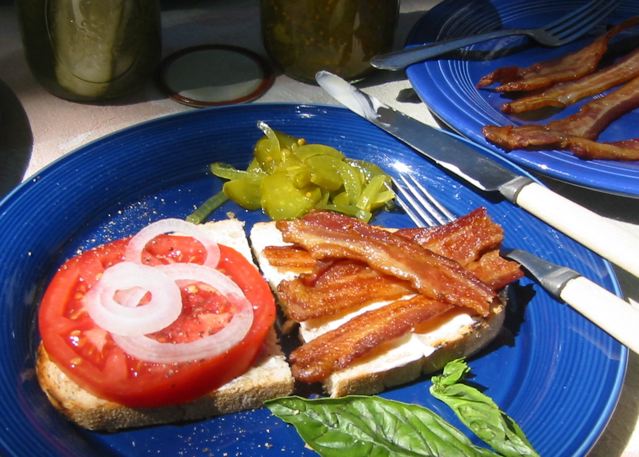
And here is a sandwich, all ready for eating, of bread smeared with mayonnaise, and bacon that’s crispy, fat sliced tomatoes, paper thin onion, and a tousle of pickle, that was canned in the kitchen by Miriam last winter, in the kitchen that David built.

img_4904.jpg
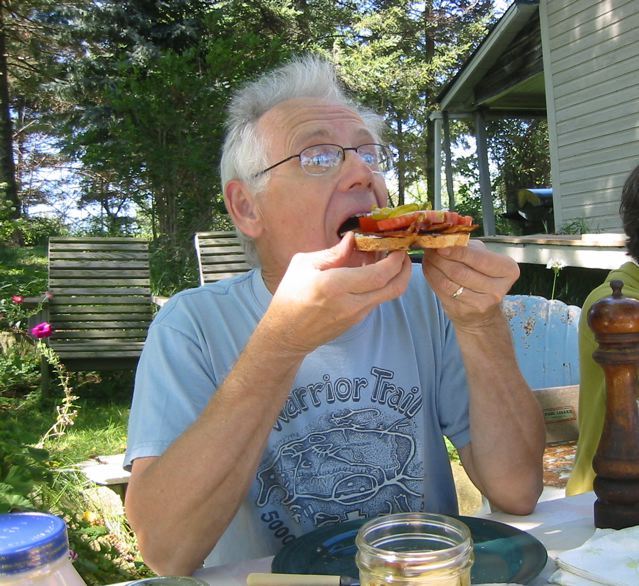
And this is David, his back to the sun, on the edge of his chair, leaning into the sandwich, that he precisely constructed, bacon, tomato and pickles, the sweets not the dills, that came from the kitchen that he built.

Miriam’s beside him, but not in the picture (she doesn’t like cameras that are pointed at her), her bread heaped with good stuff, that came from her garden, that she watered all summer, then picked for the basket, and carried to the house, the dogs alongside her, and into the kitchen that David built.

I’ll Trade You an Ibex on Rye…

beenycecil.jpg
Archived Episodes

Thousands and thousands of years ago as our ancestors wandered about the savannahs of Africa hunting and gathering and no one ever packed a lunch. Some archeologists have found traces of what they believe to be crude lunch pails and thermoses, but neither of these discoveries can outweigh the fact that they had no bread….without bread, no sandwiches. Had our Neanderthal grandparents known what they were missing, no doubt tears would have streamed down their prominent brows (if they were upside down) for sorrow at the lack of sandwiches in the Paleolithic era….DENIED the pleasure of a mammoth lettuce and tomato on wheat….DENIED a savory ibex salad sandwich on rye….DENIED a megacerosburger (California style with avocado). It was not until the emergence of Homo-sapiens that sandwiches began to flourish and the sandwich-less Neanderthals disappeared.
Professor Frederic Von Hustiebird

перен? нет!

img_4872_2.jpg
You got your animal, you got your vegetable, you got your mineral.
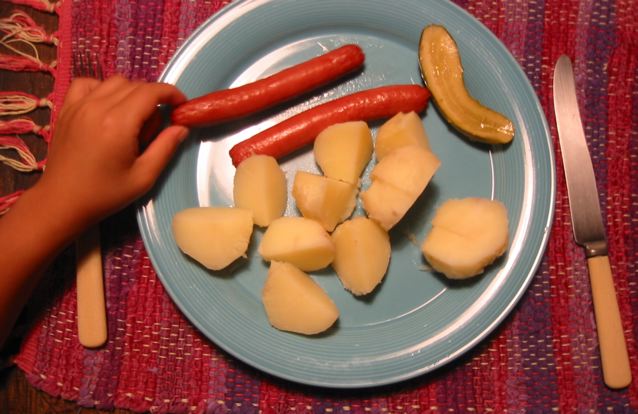
Skinny, juice-squirting Hebrew Nationals, homegrown spuds what had to be scrubbed, Grandma Rubin’s dills from the teetering pickle shelf in the dungeon. The mineral? Salt of course.

This meal speaks to me primally, must be the Russian-ness of it. My ancestor’s remains whispering to me from garden soil. Say you are living in the Moscow environs, haven’t seen daylight in months cause it is February and are committed to the “eat locally” creed. Wheat for bread? No way. The three P’s, Pork, Potatoes and Pickles? Yes way.

Salt. Could salt be considered local? Me thinks not.

The Olive Nut Rocks On

beerntsens.jpg

Since at least the 1930s Beerntsen’s has been a landmark on the main street of Manitowoc, WI, a small city on Wisconsin’s Lake Michigan shoreline. Generations of high school students have consumed sundaes and sandwiches in its booths and people of all ages stop by to purchase its delicious specialty chocolates and other candies. My most vivid memories are of the early 1940s when one of my favorites was the olive-nut sandwiches that still are listed on the menu almost 65 years later. After three generations of ownership by the Beerntsen family, a longtime employee now owns the shop but, to me, the sandwiches, chocolates, mint patties, and profusion of sundaes appear just the same as ever, and I am transported back to when it all was such a source of delight.
My mom

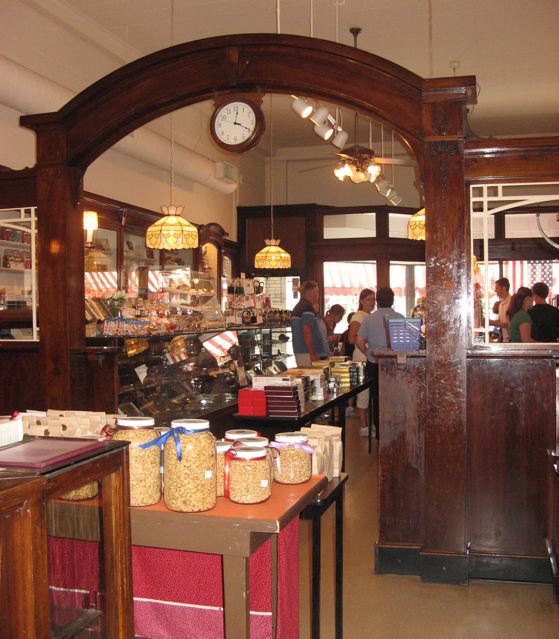
It’s been around for 65 years or so and apparently has never changed. The decor — it’s visible in the one photo — is dark wood booths, tile floor, and glass candy cases and is in beautiful shape. The menu may not have ever changed either. Pineapple figures prominently in many of the sundaes; I’m not sure why. I bought some “fairy food,” a favorite of Mother’s from when she worked there, and served it to some friends, all guys. (I didn’t tell them the name.) One of them, who has spent time in Buffalo, said, “Oh, sponge candy!” When I did mention the name, another of the guys said, “Now you tell us!” It looks like hard foam rubber covered in chocolate. The prices, while they aren’t original, still are pretty low. The sandwich was about $3 and my turtle sundae (with hot fudge on the side so it would stay hot) was about $4.
My sister, Mara

olive-n-nut-2.jpg
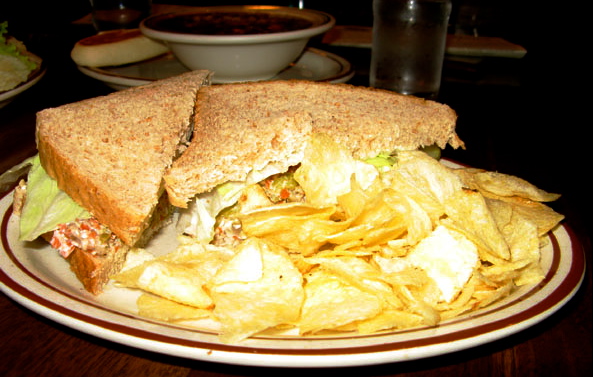
The sandwich surveyors out in the field cannot be expected to eat and shoot. Eat, shoot and leave, she did, but without reviewing the images. Dang that flash. This olive nut doesn’t know what hit it. Still, you can see a bit of the tasty, salty paste blopping out on the left.

I did a little browsing around on the dubbyou-dubbyou-dubbyou and found a surprising number of recipes for olive-nut sandwiches. Who on earth is making them? And why do the recipes all call for sliced olives? Finely chopped seems the way to go. Put the olives and nuts down on a board and run across them and back a few times with a chef’s knife. Soon olives won’t know themselves from nuts and vice versa.

Here is a representative sample:

Olive-Nut Sandwich

Ingredients
6 oz cream cheese
1/2 cup mayonnaise
1/2 cup pecans or walnuts,chopped
1 cup salad olives
2 tbsp olive juice
1 dash pepper
1 bread
1 lettuce

Directions

Let cream cheese stand at room temperature until soft. Mash with a
fork and add mayonnaise. Add chopped pecans, olives, olive juice and
pepper. Stir well. This will be mushy. Refrigerate in pint jar for at
least 24 -48 hours. It will then become thick. (Believe it or not.)
You will have nearly a pint of delectable spread! It’s best served on
very thin toast or fresh, thinly sliced bread will do. A little
lettuce is a good touch, and cutting into finger tip sizes completes
the feeling of first class.

Servings: 4 servings

Maybe the olives mash to bits when they are mixed hard with nuts, the nuts acting as tiny millstones. Love this unpretentious recipe with its enthusiastic “You will have nearly a pint of delectable spread!” Don’t know what’s meant by “1 bread” and “1 lettuce”, although I can imagine sitting down with 1 loaf, 1 head, 1 batch, 1 knife, 1 salt craving and scarfing the lot. In the middle of the night. Palm size, rather than finger tip. First class, alright.

zippy_the_pinhead.gif

As my nephew exclaimed, it’s the Weenie Beanie, not the Beanie Weenie, which comes in a can. The former is a beloved Arlington, Virginia drive-in. Pull up and loiter.

sandwiches4small.jpg
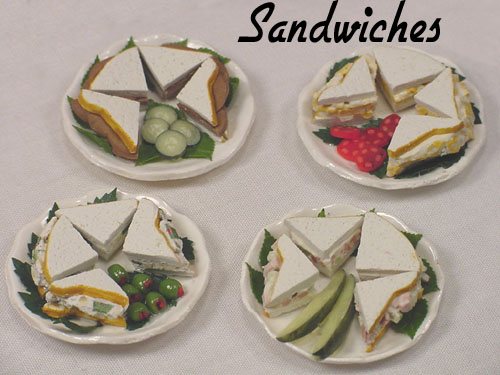
Liverwurst, Eggsalad, Hamsalad or Olive Nut Sandwich Platter

Damn Samny’s

Damn, damn, damn, those Sterns beat me to the punch again. In fact, they downed the last drop from the bowl. Well, nah, they probably have plenty of other fun road food tricks up their sleeves, their rolled-up-let’s-dig-in sleeves. Damn, I wanted to drive around the country eating sandwiches and telling all us poor old house-‘n-job-bound drones about it.

0618728988.gif

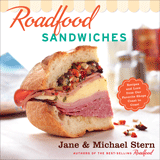
Roadfood Sandwiches: Recipes and Lore from Our Favorite Shops Coast to Coast, the new book by Jane and Michael Stern, is out and can be yours for about 15 bucks. Think I’ll take my 15 clams and invest in myself via caloric intake, aka a coupla crabcake sandwiches. Truth be told, I wouldn’t mind reading about the Hot Brown, but no way am I going to make one myself. If it ain’t in Louisville, no thank you. This book is one x-acto knife away from finding a space on my shelf. Recipes be gone! Please pass the map.